
Last updated November 4, 2026
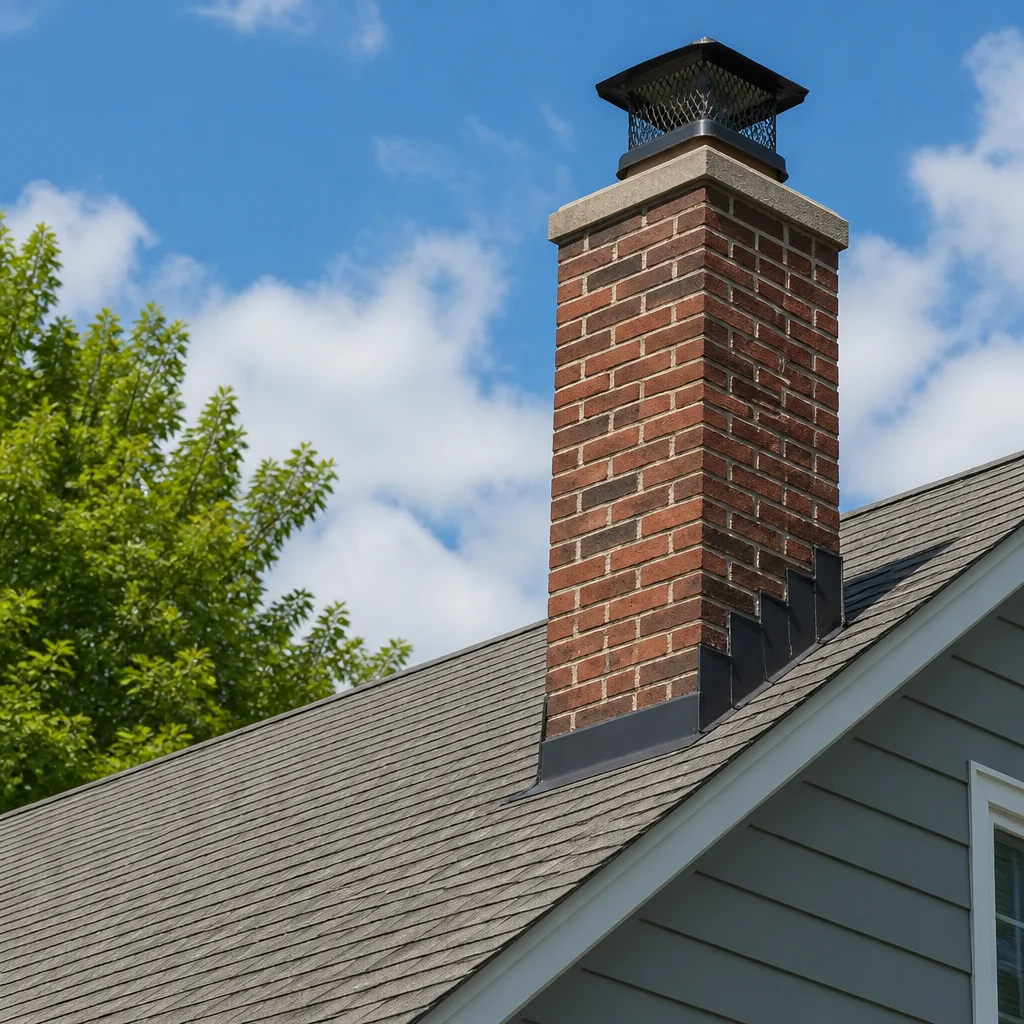 Sweep & inspection
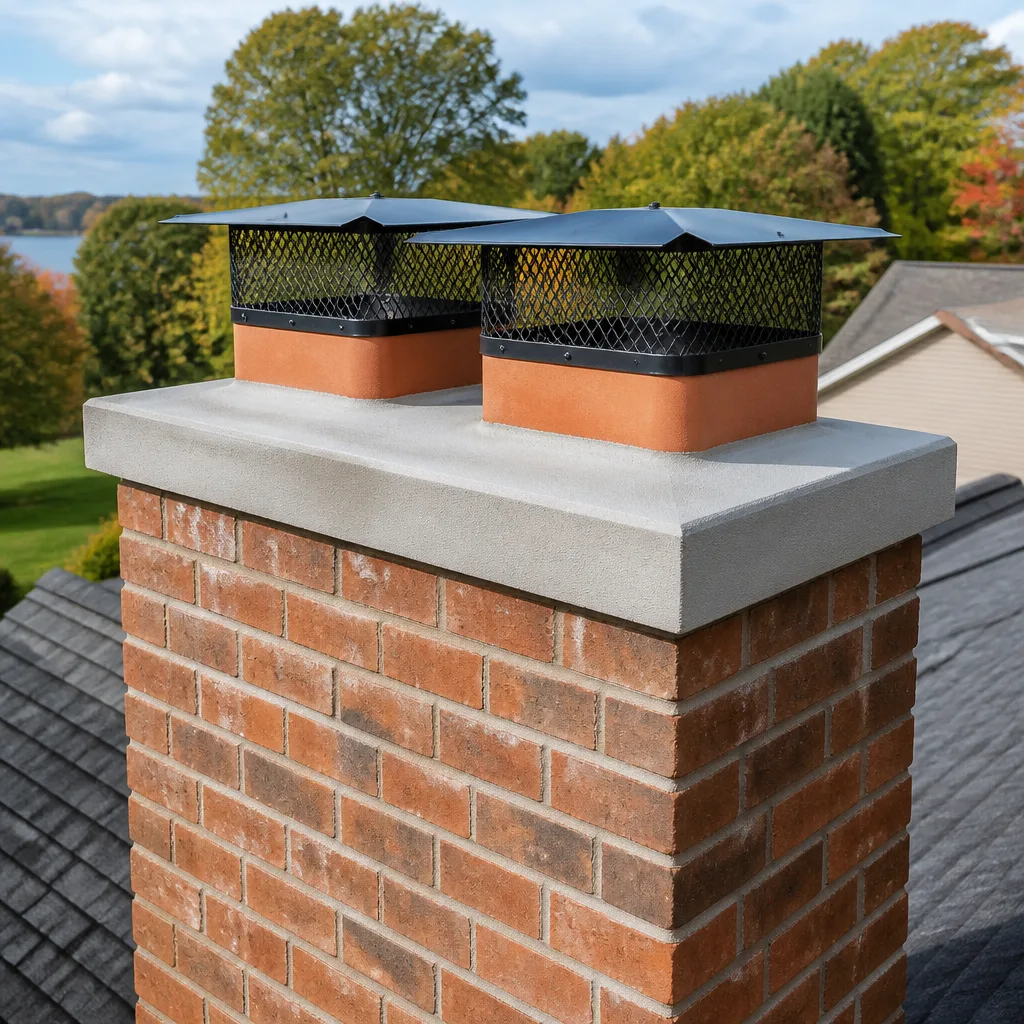 Caps & crowns
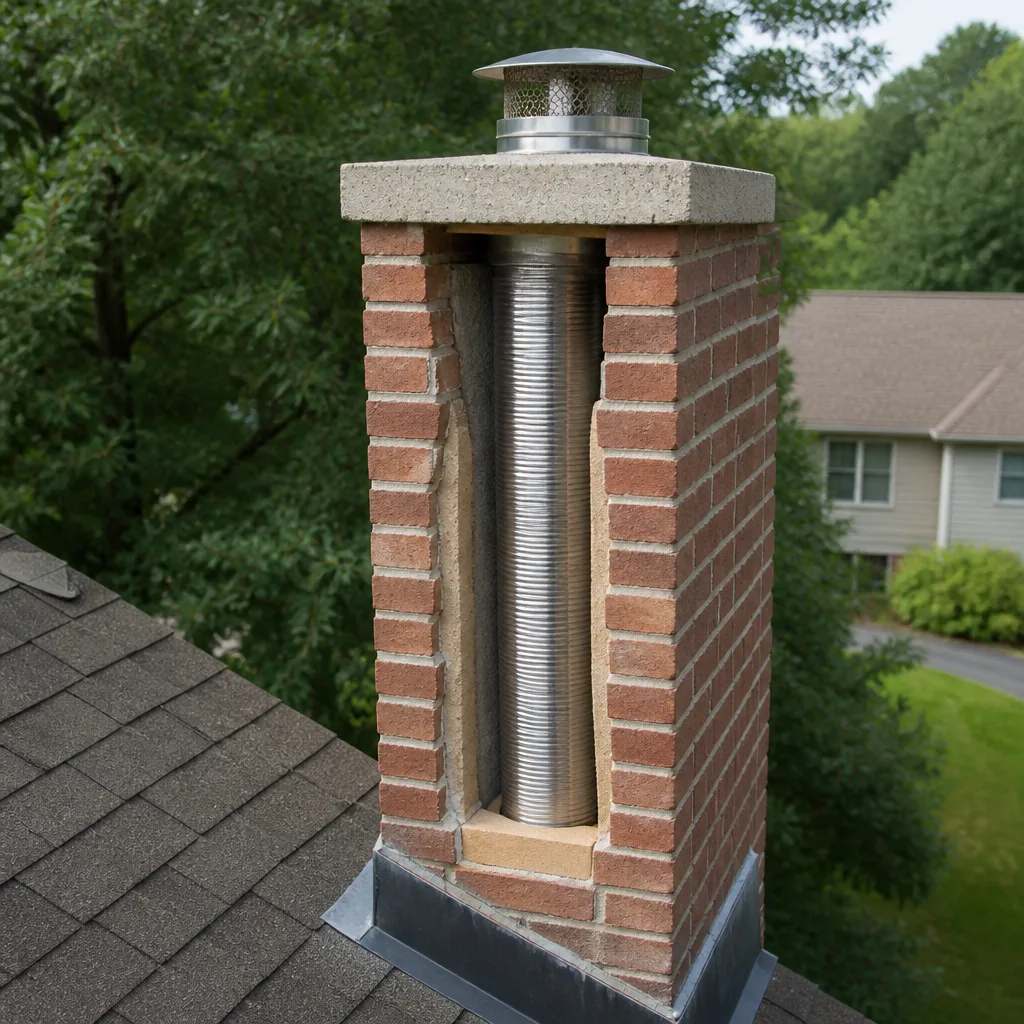 Flue relining
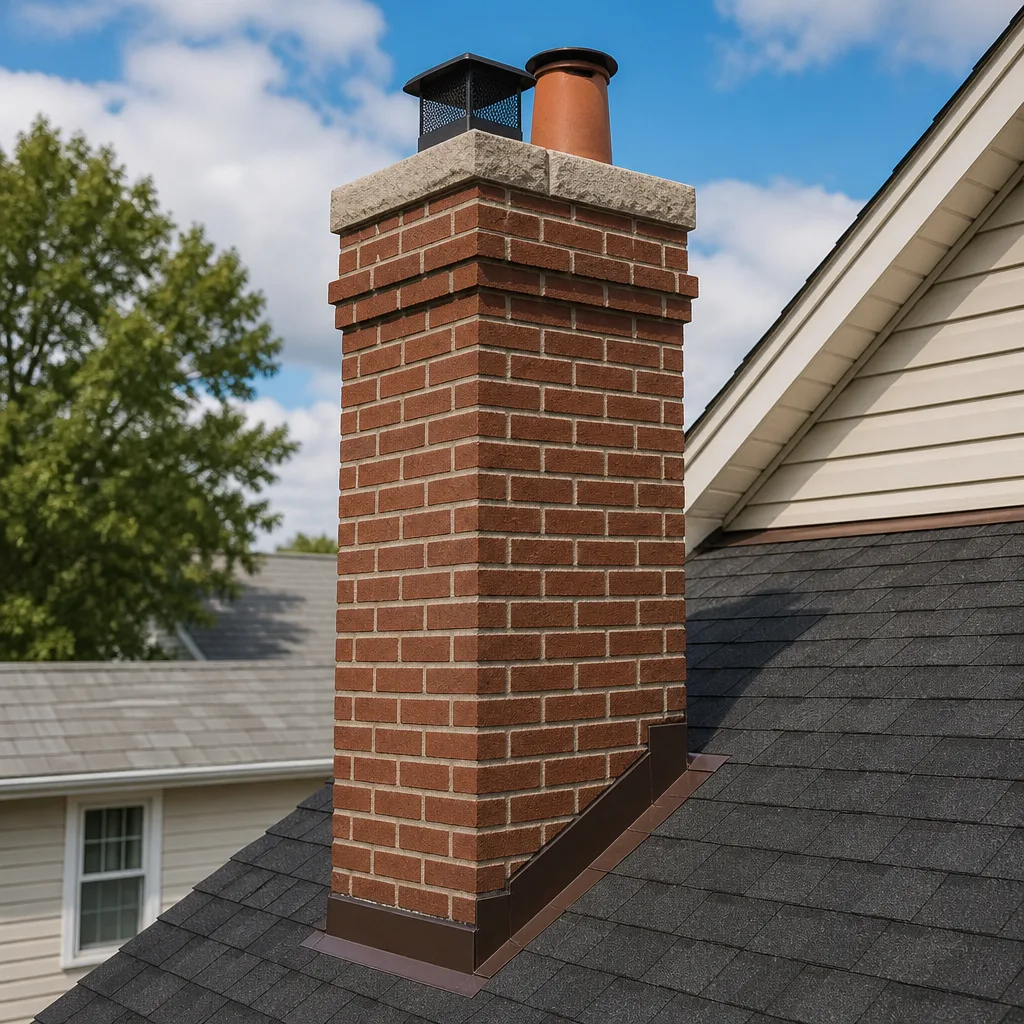 Masonry repair
 Gas fireplace service
Level 1 sweep and inspection to the NFPA 211 annual standard - flue, crown, cap, and flashing checked and photographed
Chimney sweep logs do not sweep chimneys. They loosen some creosote - which then falls where a brush and vacuum still have to collect it.
DIY vs Professional Chimney Cleaning: The Sunnyvale Homeowner’s Decision Guide
You can rent chimney brushes at a Sunnyvale hardware store and clean a flue yourself, but if that fireplace is ever involved in a smoke damage claim or a house fire, an insurance adjuster will ask for a certified inspection record. Your DIY brush pass won’t satisfy that requirement. This guide walks through what DIY cleaning actually accomplishes, where it falls short, and how Sunnyvale homeowners can structure a maintenance approach that protects both the chimney and the paperwork trail. We’ll cover costs, equipment realities, safety concerns specific to Bay Area housing stock, and the moments when documentation matters more than elbow grease.
Quick Answer
DIY chimney cleaning can remove loose soot from a straight flue, but it cannot address glazed creosote, smoke chamber deposits, or hidden liner damage, and it produces no inspection record for insurance or resale purposes. For most Sunnyvale homeowners, the practical answer is a hybrid: light DIY maintenance between annual professional cleanings, with the professional visit doing the heavy mechanical work and producing the documentation that actually protects you.
Styles & brands we work with
- Sweep & inspection
- Caps & crowns
- Flue relining
- Masonry repair
- Gas fireplace service
Table of Contents
- What DIY Cleaning Can and Cannot Accomplish
- The Documentation Gap: When Records Matter
- Sunnyvale-Specific Scenarios: Where DIY Makes Sense and Where It Doesn’t
- Equipment Reality: Professional Tools vs. What Homeowners Actually Use
- Building a Hybrid Maintenance Approach
- Step-by-Step: How a Professional Chimney Cleaning Works
- Common Mistakes to Avoid
- When to Call a Professional
What DIY Cleaning Can and Cannot Accomplish
A chimney brush on a flexible rod will knock loose soot from the flue walls. That’s what it’s designed to do, and in a straight, unlined masonry chimney with light use, a homeowner can remove a meaningful amount of the fluffy black stuff that accumulates after a season of fires. Some Sunnyvale homes in neighborhoods like Cherry Chase or Serra Park have straightforward masonry chimneys from the 1960s and 1970s, and a careful DIY pass with the right brush diameter can clear the easiest deposits.
But here’s what that brush pass doesn’t do. Glazed creosote, the shiny, tar-like substance that forms when wood smolders at lower temperatures, bonds to flue walls and cannot be removed by brushing alone. It requires chemical treatment or mechanical rotary cleaning. Smoke chamber deposits, which accumulate in the sloped area above the firebox, are nearly impossible to reach with a homeowner-grade brush from below. And any damage inside the liner, cracked tile, a separation at a joint, rust in a metal flue, stays hidden without a camera inspection. The brush tells you what came off the walls. It doesn’t tell you what’s wrong with the walls.
A professional chimney sweep uses rotary tools, chemical treatments for glazed creosote, and high-powered HEPA-filtered vacuums to contain the dust. More importantly, the sweep inspects what the brush touched. We look at the smoke chamber, the damper, the flashing at the roofline, the cap and crown. A DIY brush pass is a cleaning event. A professional visit is a cleaning plus an inspection, and the inspection is the part that catches problems before they become fires.
The Documentation Gap: When Records Matter
Insurance companies don’t actually require homeowners to clean their chimneys on a schedule. What they require, in most policies, is that homeowners maintain their property and don’t create hazards through negligence. Here’s the practical problem: if a chimney fire damages your house, the adjuster will look for evidence that you maintained the chimney. A receipt for a brush rental from a hardware store shows you attempted something. A dated inspection report from a professional Chimney Cleaning Sunnyvale visit shows you followed an accepted maintenance practice.
The same logic applies when you sell a house. Home inspectors in Sunnyvale routinely flag fireplaces for evaluation when there’s visible creosote or an unknown liner condition. If the buyer asks for a chimney certification, you’ll need a professional who can inspect, document, and if necessary repair. We’ve had sellers call us after a DIY clean because the buyer’s inspector still wanted a professional sign-off. The DIY work didn’t hurt, but it didn’t satisfy anyone.
Documentation matters most in three situations. First, after any chimney fire, even a small one that you contained quickly, the liner needs documented evaluation. Second, when you’re switching fuel types, from wood to gas logs or from gas logs back to wood, since different fuels leave different deposits and different liners are rated for different things. Third, when you’re buying or selling a home in Sunnyvale, where fireplace condition is a standard part of the disclosure package. In all three cases, a professional record is the only thing that counts.
Sunnyvale-Specific Scenarios: Where DIY Makes Sense and Where It Doesn’t
Sunnyvale’s mild climate means most fireplaces get used in bursts. December and January see the heaviest use, often on evenings when the temperature drops into the 40s. The rest of the year, the fireplace sits idle. That usage pattern creates specific conditions. Light, intermittent fires produce more creosote than hot, sustained burns, because the fire never gets hot enough to burn off the early deposits. A household that burns one fire a week from Thanksgiving through Valentine’s Day may build up more creosote than one that burns every other day, because the one-fire-a-week family’s chimney never reaches full operating temperature for a complete burn cycle.
In that scenario, a mid-season DIY brush pass between professional cleanings can actually help. If you’re burning regularly and seeing soot accumulate, a homeowner-grade brushing keeps loose deposits from building up until the annual professional visit. Where DIY creates false confidence is with insert systems and pre-1980 tile liners. Older homes in Sunnyvale, particularly in the Heritage District and around Washington Park, often have original clay tile liners that are now 50 to 70 years old. Those tiles crack. A brush pass won’t reveal the crack, and a homeowner can’t assess whether the crack is superficial or structural. Same with gas log sets: they produce water vapor as a combustion byproduct, and that moisture combined with old masonry can create corrosion and spalling that a visual DIY inspection from the firebox won’t catch.
The rule we give Sunnyvale homeowners is simple. If your chimney is straight, your liner is less than 20 years old, and you burn dry hardwood, a DIY brush pass between professional visits is low-risk. If your house predates 1980, you have an insert, you burn unseasoned wood, or you’ve never had the liner camera-inspected, DIY is not a maintenance plan. It’s a gamble that you’ll catch a problem you can’t actually see.
Equipment Reality: Professional Tools vs. What Homeowners Actually Use
A professional HEPA-rated chimney vacuum costs upwards of $2,000. These aren’t shop vacuums with a filter taped on. They’re sealed units designed to pull fine creosote dust and combustion particulates out of the air at high volume, so the inside of your house doesn’t fill with a film of fireplace soot. A homeowner with a rented brush and a hardware-store tarp is doing damage control, not contamination prevention.
Let’s be honest about the mess. Chimney cleaning is a dirty job. Soot is fine, it’s sticky, and it travels. When we clean a flue, we run a negative-air setup that keeps the dust moving up and out, not into the living room. A homeowner brushing from below without that equipment will get soot on the hearth, on the rug, and often into the air that circulates through the house. Some of that comes down to technique. Most of it comes down to equipment. A tarp catches what falls. A HEPA vacuum system catches what floats.
Then there’s the chemistry. Removing glazed creosote requires a chemical treatment, typically applied as a spray or a log that breaks down the tar-like deposits over several days, followed by mechanical removal. The professional-grade products we use are the same compounds specified for commercial flue systems, not the retail products sold for occasional use. And for liner inspection, a camera system that can see hairline cracks and joint separations costs several thousand dollars. It’s not a tool most homeowners buy for a once-a-year task.
This isn’t to say the hardware store rental is worthless. It’s to say the hardware store rental is a brush. It does one thing. Professional equipment does several things, and the gap between those capabilities is what you’re paying for when you hire a sweep.
Building a Hybrid Maintenance Approach
The most practical maintenance plan for many Sunnyvale homeowners isn’t an either-or choice. It’s a structured hybrid that uses DIY where it’s appropriate and professional service where it’s essential. Here’s how to structure it so you don’t compromise your insurance standing or your chimney’s condition.
- Start with a professional inspection and cleaning. You need a baseline. A professional visit establishes the actual condition of your liner, smoke chamber, and cap. Until you have that data, you don’t know whether DIY cleaning is even safe for your specific chimney. If the liner is cracked, brushing could make it worse.
- Ask for a written report. The inspection record is the document that matters for insurance and resale. Make sure it includes the date, the findings, the cleaning performed, and any recommendations. File it where you keep your other home maintenance records.
- Use DIY between visits only if the professional gives you a green light. If your chimney is straight, your liner is sound, and your creosote buildup is light, a mid-season brush pass is fine. If you have glazed creosote, an insert, or an older liner, skip the DIY and schedule professional cleanings more frequently.
- Don’t skip the annual professional visit. The DIY work supplements, not replaces, the professional record. Insurance adjusters and home inspectors want to see consistent professional maintenance, not a gap in the records with a note that says “cleaned it myself.”
- Address dryer vents in the same appointment. This is where single-source service helps. While we’re at the house for a chimney cleaning, we can handle dryer vent cleaning in the same visit. Two of the most common residential fire sources, one appointment, one set of documentation.
The hybrid approach works because it acknowledges what DIY does well and what it doesn’t. A homeowner who understands the difference is the homeowner who doesn’t end up with a surprise liner repair or a denied claim.
Step-by-Step: How a Professional Chimney Cleaning Works
Understanding what happens during a professional cleaning helps you evaluate whether the DIY version is really doing the same job. Here’s what a standard professional cleaning involves, step by step.
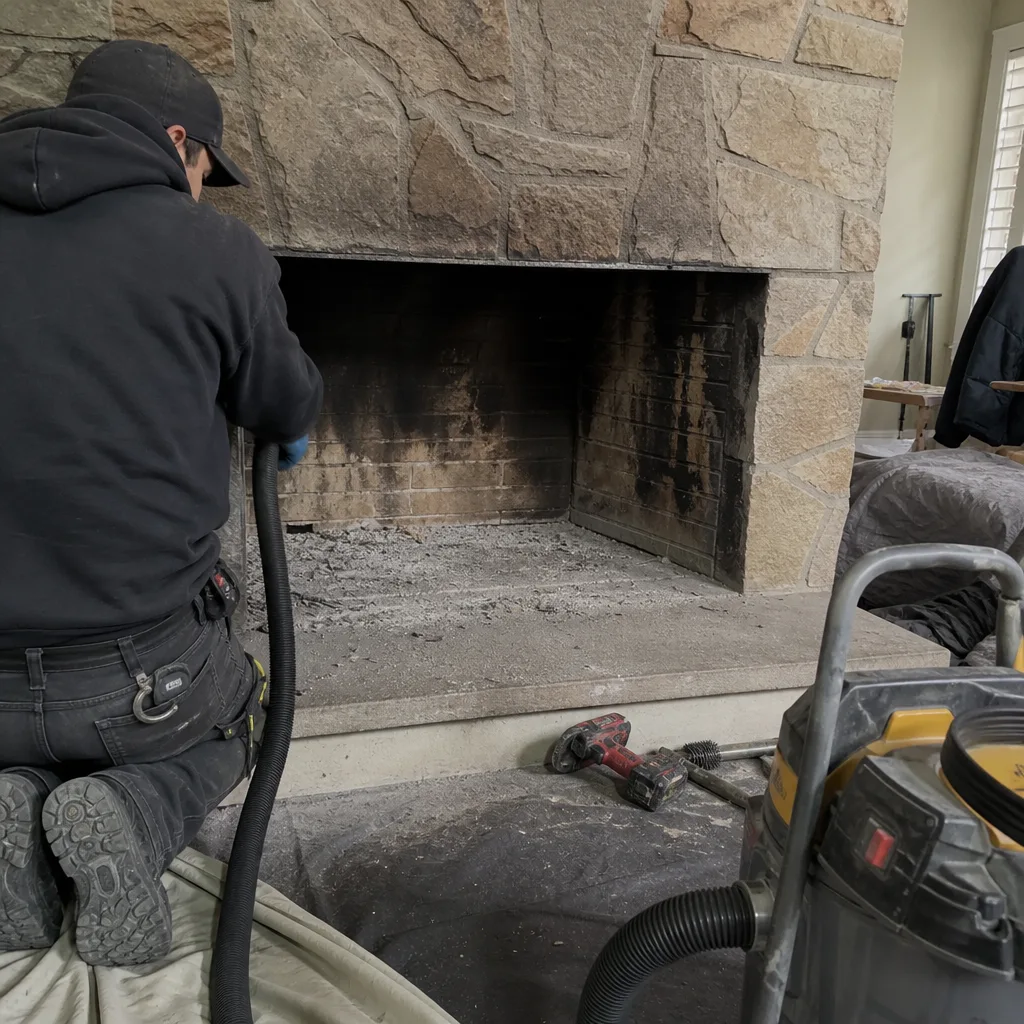
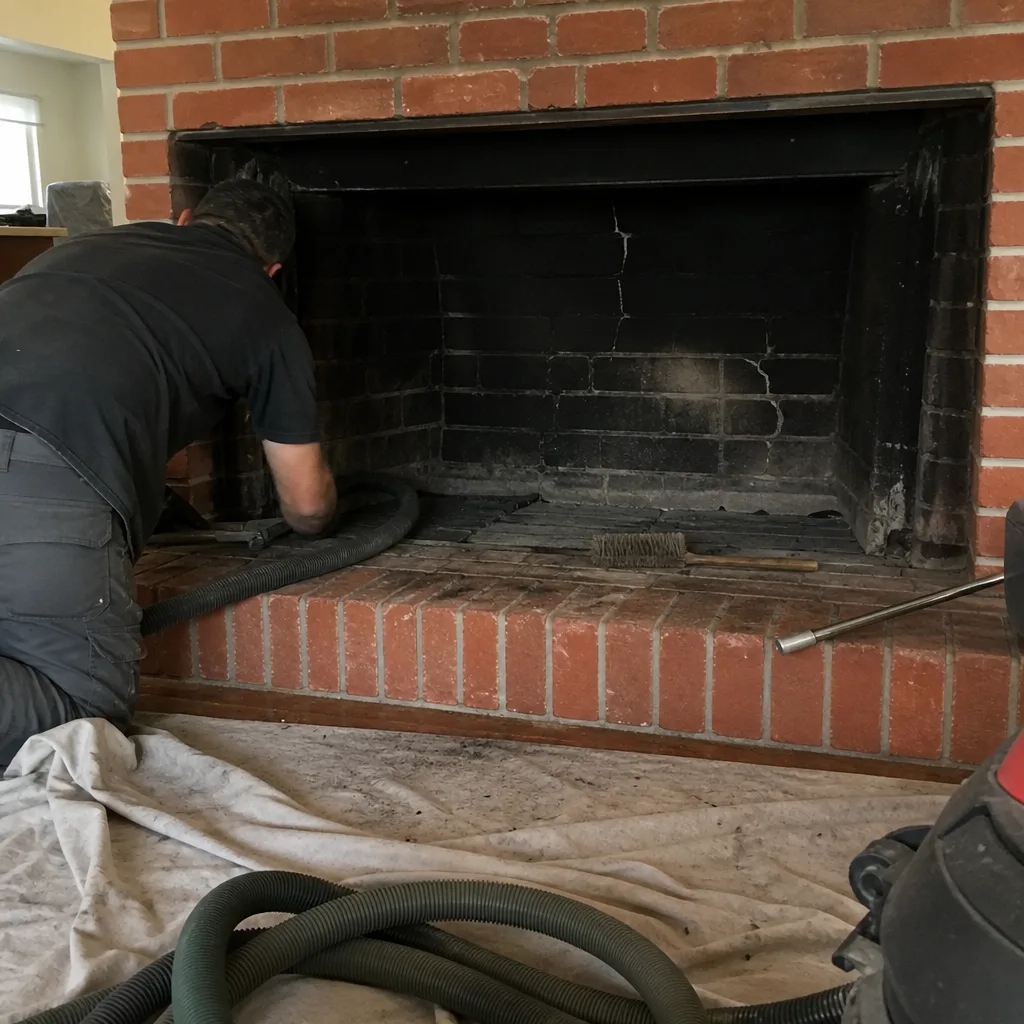
- Setup and protection. We lay drop cloths around the hearth and set up the HEPA filtration system before touching the flue. The negative air pressure keeps soot from entering the living space.
- Initial inspection. Before cleaning, we look at the firebox, damper, smoke chamber, and accessible portions of the flue. This tells us what we’re dealing with and whether the cleaning needs chemical treatment first.
- Mechanical cleaning. We run rotary brushes sized to your specific flue diameter through the full length of the chimney. For stubborn creosote, this may follow a chemical soak that softens glazed deposits.
- Smoke chamber attention. The sloped area above the firebox accumulates deposits that a straight brush pass misses. Professional cleaning includes this area, which is a common site for chimney fires in older masonry chimneys.
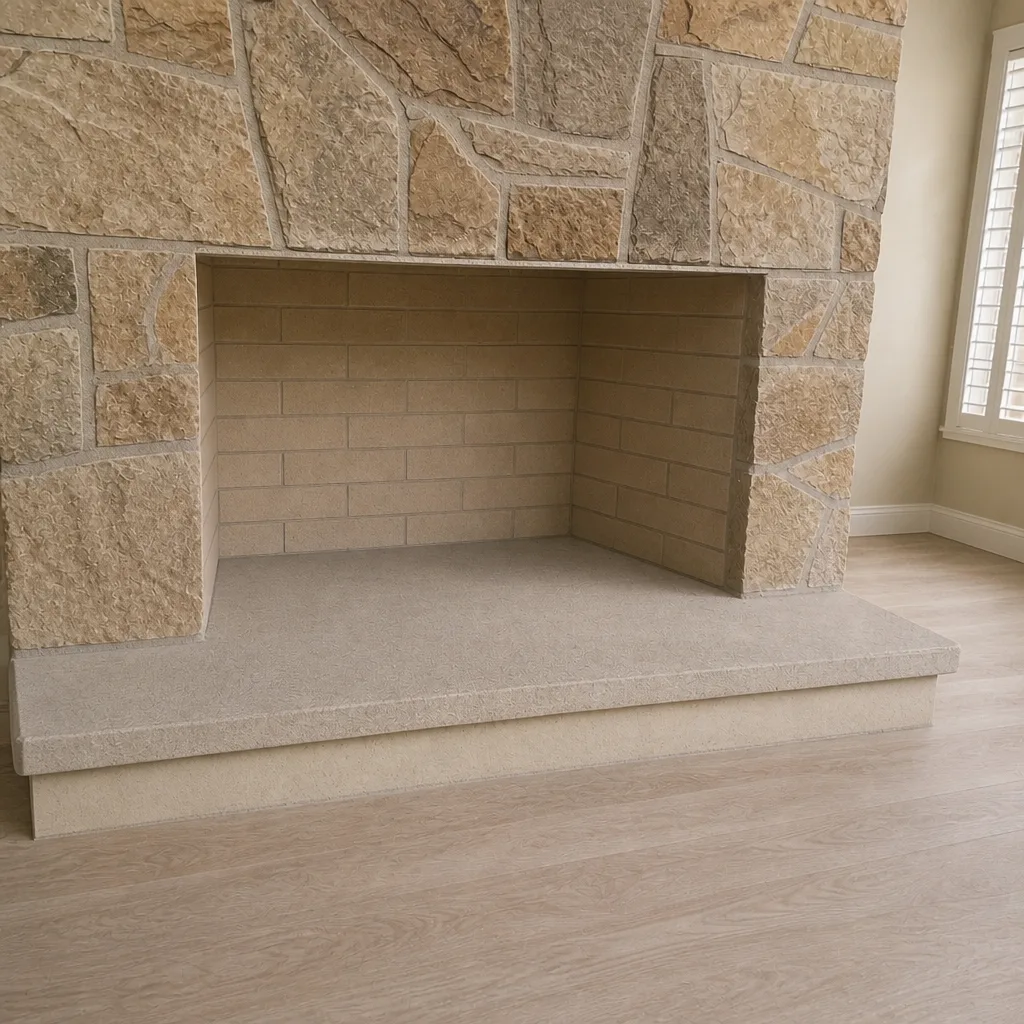
- Post-cleaning inspection. After the flue is clean, we inspect it again, often with a camera. This is when we look for cracks, joint separations, rust, and other damage. The cleaning reveals what was hidden.
- Report and recommendations. You get a written record of what was done and what was found. If repairs are needed, we explain them and quote them. No pressure, no mystery. If nothing is wrong, you’ve got a clean chimney and a paper trail.
That last step is the one DIY can never replicate. The report is what makes the visit count beyond the immediate cleanliness.
Common Mistakes to Avoid
- Assuming a clean-looking firebox means a clean flue. The firebox is the part you can see. The flue is the part that matters. Soot in the firebox tells you almost nothing about creosote conditions 20 feet up.
- Using a brush that’s the wrong size. A brush too small for your flue leaves deposits behind. A brush too large can damage older tile liners. Professional sweeps measure the flue before selecting tools.
- Burning unseasoned wood and expecting cleaning to fix the problem. Green wood produces more creosote than dry wood, and no cleaning schedule can keep up with a steady diet of unseasoned fuel. Sunnyvale’s mild climate doesn’t dry wood as fast as you’d think, and a lot of “seasoned” firewood sold in the Bay Area isn’t actually below 20% moisture.
- Skipping the inspection because the chimney “looks fine.” Most chimney problems are invisible from the outside. Cracked liners, deteriorated mortar joints, and hidden creosote deposits all look fine until something goes wrong.
- Treating a DIY clean as equivalent to a professional record. It isn’t. If you need documentation for insurance or sale, a hardware store rental receipt won’t substitute for an inspection report.
- Ignoring the dryer vent while focusing on the chimney. Lint-clogged dryer vents cause thousands of house fires a year. If you’re thinking about fire safety, both systems deserve attention. The good news is that one appointment can cover both.
When to Call a Professional
Call a professional when you notice any of these: a strong odor coming from the fireplace even when it’s not in use, visible glazed or shiny creosote on the flue walls, smoke entering the room during a fire, animals or nesting material in the flue, water stains on the ceiling near the chimney, or if it’s simply been more than a year since anyone inspected the system. Also call if you’re switching fuel types, buying or selling a home, or if you’ve experienced even a small chimney fire. These are the moments when documentation and trained eyes matter most. Chimney Cleaning Sunnyvale offers free estimates in Sunnyvale. Call (833) 593-7116 to schedule. We answer 24/7. Fast dispatch from 7am to 7pm, Sunday through Friday.
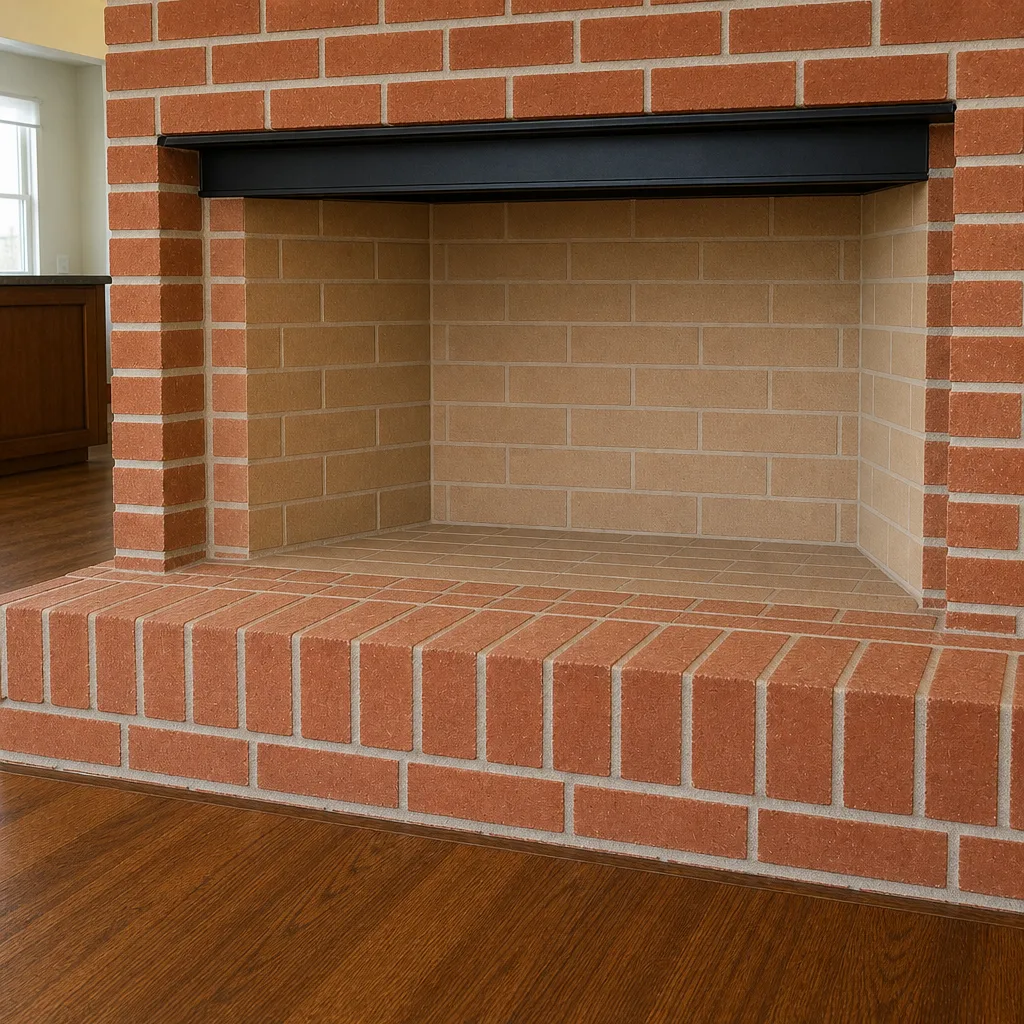
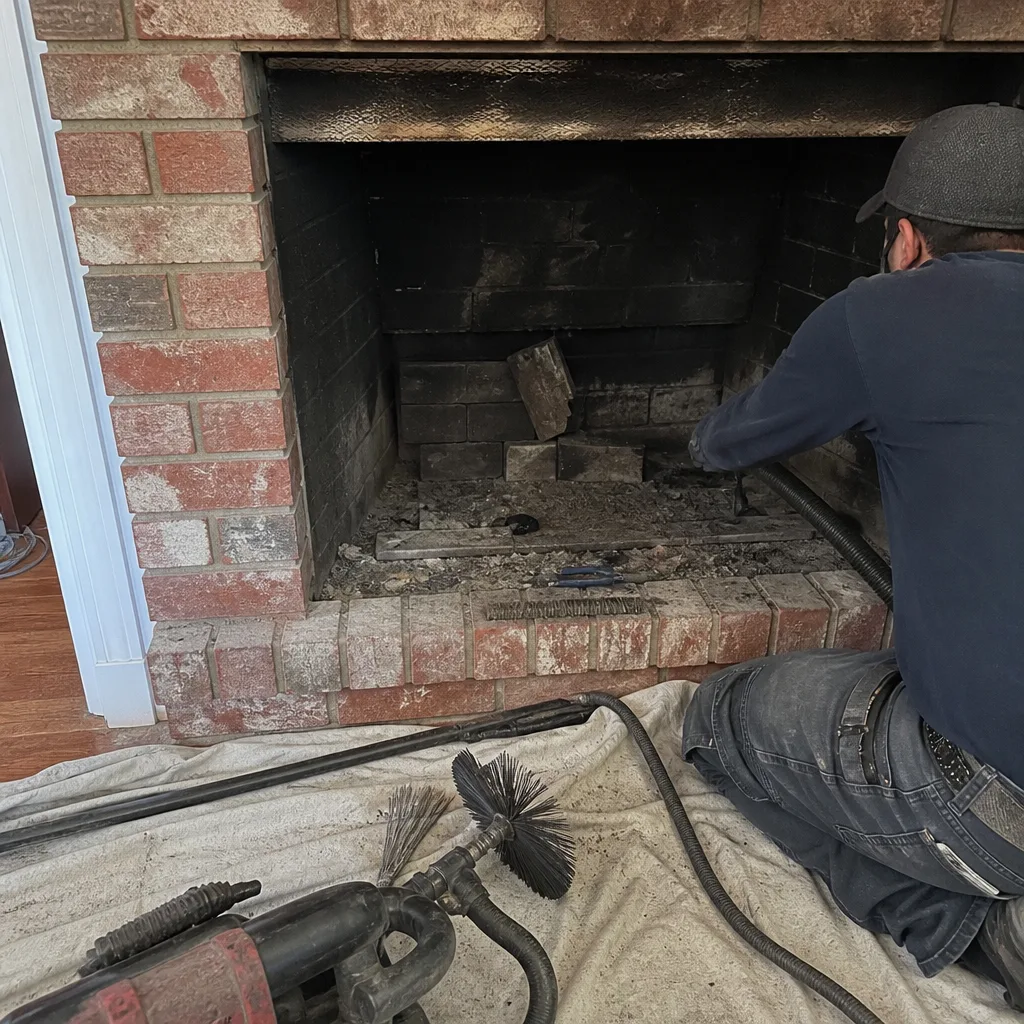
See the difference
 Before
 After
 Before
 After
 Before
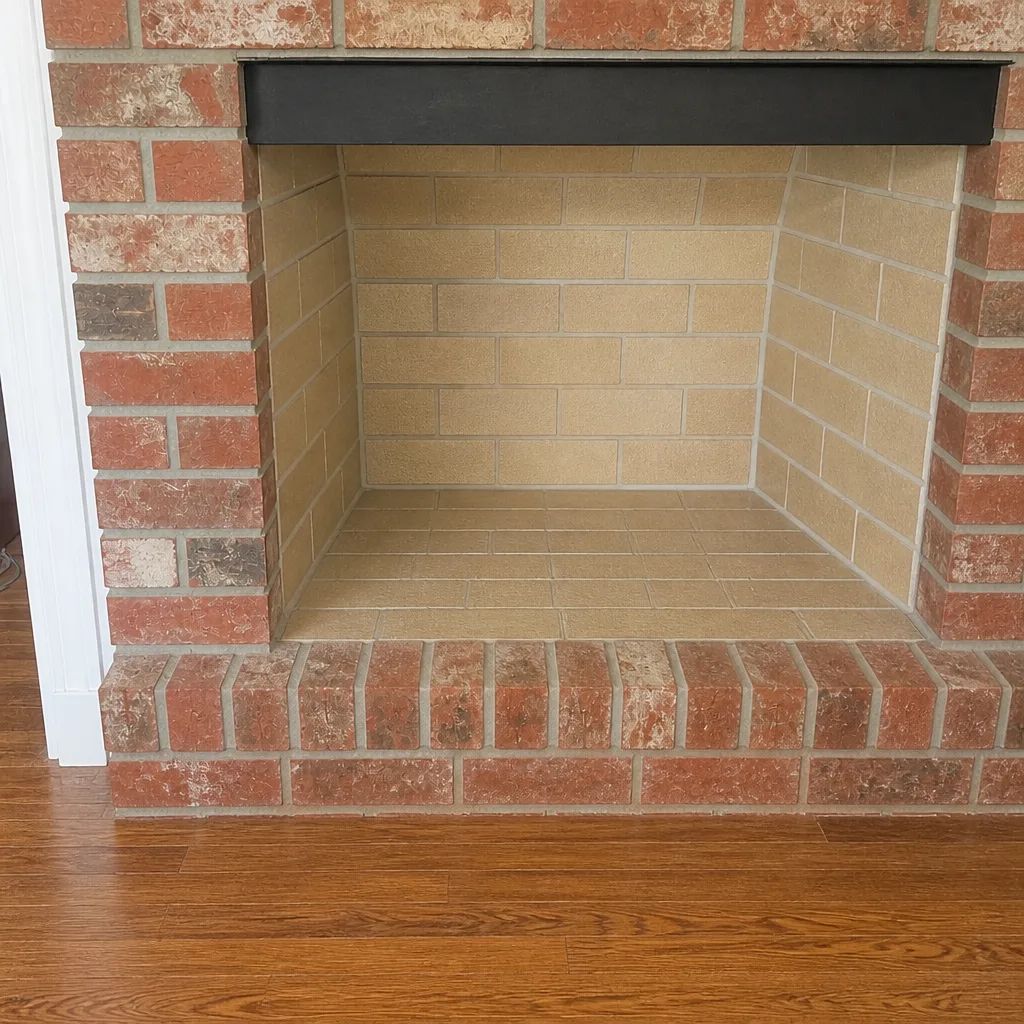 After
Frequently Asked Questions
Yes, you can physically clean a straight flue with rented equipment, but the question is whether you should. A DIY brush pass removes loose soot but doesn’t address glazed creosote, smoke chamber deposits, or hidden liner damage. For most Sunnyvale homes, DIY works best as a supplement to annual professional cleaning, not a replacement.
The National Fire Protection Association recommends an annual inspection and cleaning when needed. In practice, Sunnyvale homeowners who burn regularly during the winter months should schedule a professional cleaning once a year, typically in early fall before burning season starts. Light users can sometimes stretch to every other year, but an annual inspection is still the standard.
Professional chimney cleaning in Sunnyvale typically runs between $200 and $400 depending on flue height, creosote condition, and whether chemical treatment is needed. The written estimate sets the final price. Call (833) 593-7116 for a free estimate based on your specific chimney.
Most homeowners policies cover chimney fires as part of the dwelling coverage, but claims are evaluated case by case. If the adjuster finds evidence of neglected maintenance, the claim can be reduced or denied. That’s why a documented professional cleaning and inspection record matters so much: it’s proof you maintained the system.
Cleaning removes deposits. Inspection evaluates the condition of the flue, liner, smoke chamber, cap, and crown. A professional service does both: the cleaning reveals what’s underneath, and the inspection documents what’s there. DIY can only do the cleaning part, and only partially.
Yes. Creosote is combustible, and a hot fire can ignite deposits that have accumulated in the flue or smoke chamber. Chimney fires often burn hot enough to crack clay tile liners, and once a liner is cracked, the next fire can spread heat to the surrounding framing. This is the exact scenario that professional cleaning and inspection is designed to prevent.
The Bottom Line
DIY chimney cleaning isn’t a shortcut to save money. It’s a maintenance supplement that works only when you understand its limits. The brush removes loose soot. The professional handles glazed creosote, inspects the liner, documents the condition, and gives you a record that holds up when it matters. For Sunnyvale homeowners, the smartest approach is a hybrid: professional cleaning and inspection once a year, light DIY maintenance between visits if your specific chimney is a good candidate, and a paper trail that proves you did the right thing. That combination protects your home, your insurance standing, and your ability to sell without surprises.
Written by the team at Chimney Cleaning Sunnyvale, serving Sunnyvale since 2014.